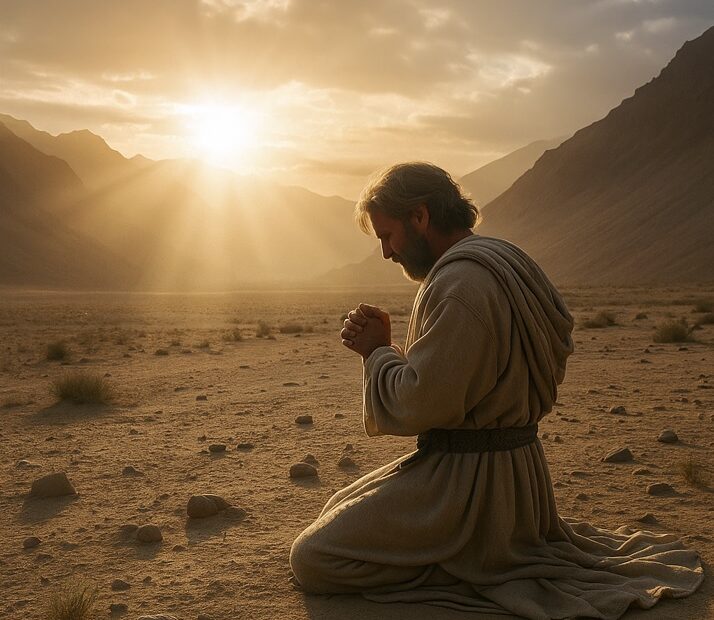
“Portanto, quer comais quer bebais, ou façais outra qualquer coisa, fazei tudo para glória de Deus.” – 1ª Coríntios 10:31
Jejuar significa deixar de lado – por um momento – o alimento e os desejos da carne (comida e pecado) e, alimentar o espírito (oração e leitura da bíblia). A bíblia ensina para que serve o jejum e de que forma fazê-lo.
Vejamos como fez o profeta Daniel (jejum que envolve alimentos):
Daniel 10:2 e 3 “Naqueles dias eu, Daniel, estive triste por três semanas. Alimento desejável não comi, nem carne nem vinho entraram na minha boca, nem me ungi com unguento, até que se cumpriram as três semanas.”.
Daniel 10:12 “… Não temas, Daniel, porque desde o primeiro dia em que aplicaste o teu coração a compreender e a humilhar-te perante o teu Deus, são ouvidas as tuas palavras; e eu vim por causa das tuas palavras.”.
Daniel abriu mão de “alimento desejável”, ou seja, deixou de comer aquilo que gostava por 21 dias.
Em outro momento o profeta Isaías exorta o povo que se abstenha do pecado e ajude o próximo enquanto jejua:
Isaías 58:6 e 7 “Porventura não é este o jejum que escolhi, soltar as correntes da injustiça, … pôr em liberdade os oprimidos … partilhar sua comida com o faminto … não recusar ajuda ao próximo?”.
Deus mandou o profeta exortar o povo porque estavam fazendo jejum por razões egoístas e mesquinhas. Jejuavam para ter mais terras, mais gado e para resolver pendências judiciais entre si.
Concluindo, o jejum serve para nos aproximarmos de Deus enquanto nos afastamos da carne.
Quer saber mais sobre este assunto? Veja em:
 English Translation
How to Fast 1 of 7 — Should I Fast from Food or from Sin?
“Therefore, whether you eat or drink, or whatever you do, do all to the glory of God.” – 1 Corinthians 10:31
Fasting means setting aside — for a moment — food and the desires of the flesh (food and sin), and feeding the spirit (through prayer and reading the Bible). The Bible teaches us the purpose of fasting and how to do it.
Let’s see how the prophet Daniel fasted (a fast involving food):
Daniel 10:2–3
“In those days, I, Daniel, was mourning for three full weeks. I ate no pleasant food; no meat or wine came into my mouth, nor did I anoint myself at all, till three whole weeks were fulfilled.”
Daniel 10:12
“… Do not fear, Daniel, for from the first day that you set your heart to understand, and to humble yourself before your God, your words were heard; and I have come because of your words.”
Daniel gave up “pleasant food,” meaning he stopped eating what he enjoyed for 21 days.
At another time, the prophet Isaiah exhorted the people to abstain from sin and help others while fasting:
Isaiah 58:6–7
“Is not this the fast that I have chosen: to loose the chains of injustice … to set the oppressed free … to share your food with the hungry … not to turn away from helping your neighbor?”
God instructed the prophet to rebuke the people because they were fasting for selfish and petty reasons. They fasted to gain more land, more cattle, and to resolve legal disputes among themselves.
In conclusion, fasting is meant to draw us closer to God as we turn away from the desires of the flesh.
 中文翻译(简体)
如何禁食 1 之 7 —— 我应该禁食食物还是罪?
“所以,你们或吃或喝,无论做什么,都要为荣耀神而行。”—— 哥林多前书 10:31
禁食的意思是暂时放下食物和肉体的欲望(食物和罪),而滋养灵性(祷告和读圣经)。圣经教导了禁食的目的和方法。
让我们看看先知但以理是如何禁食的(涉及食物的禁食):
但以理书 10:2–3
“当那些日子,我但以理悲哀了三个七日。美味我没有吃,酒肉没有入我的口,也没有用油抹身,直到满足了三个七日。”
但以理书 10:12
“… 但以理,不要惧怕!因为从你第一日专心求明白,将自己在你神面前刻苦的时候,你的话已蒙应允,我是因你的话而来。”
但以理放弃了“美味”,也就是他喜欢吃的东西,持续了21天。
在另一个时刻,先知以赛亚劝勉百姓在禁食时要远离罪恶并帮助他人:
以赛亚书 58:6–7
“我所拣选的禁食,岂不是要松开凶恶的绳、解下轭上的索、使被欺压的得自由……把你的食物分给饥饿的人……不躲避自己的骨肉吗?”
神让先知责备百姓,因为他们禁食的动机自私、狭隘。他们禁食是为了得到更多的土地、更多的牲畜,或解决彼此之间的法律纠纷。
总而言之,禁食的目的是让我们远离肉体的私欲,亲近神。
Pingback: Como Jejuar 7 de 7 Como Não Fazer o Jejum? » Deus te Abençoe
Pingback: Se a Carne é Fraca Como Posso ser Cristão? » Deus te Abençoe
Pingback: Caio Sempre no Mesmo Pecado, o que Faço? » Deus te Abençoe
Pingback: O Meu Jejum está Errado? » Deus te Abençoe
Pingback: Como Fazer Jejum? » Deus te Abençoe
Não é possível comentar.