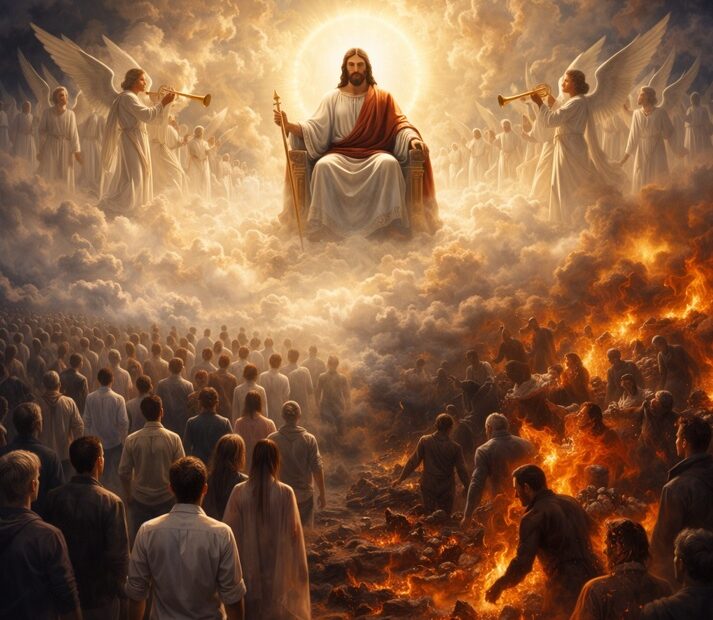
“Ai de ti, Corazim! ai de ti, Betsaida! porque, se em Tiro e em Sidom fossem feitos os prodígios que em vós se fizeram, há muito que se teriam arrependido, … Por isso eu vos digo que haverá menos rigor para Tiro e Sidom, no dia do juízo, do que para vós.”. – Mateus 11:21 e 22
A Bíblia ensina que haverá diferentes graus de juízo. No versículo acima Jesus afirma que Tiro, Sidom e até Sodoma teriam se arrependido se tivessem visto os sinais realizados em Corazim, Betsaida e Cafarnaum. Por isso, Ele declara que o juízo será menos rigoroso para algumas cidades do que para outras.
“Menos rigor” não significa absolvição. Sodoma será julgada, mas com menor rigor do que aqueles que rejeitaram diretamente o próprio Cristo apesar de o terem visto e experimentado seu poder.
A Bíblia ensina que todos prestarão contas, porém não de forma uniforme, e sim conforme obras, conhecimento e resposta à verdade. Veja o seguinte:
- Lucas 12:47–48 “Aquele servo que conheceu a vontade de seu senhor e não se preparou… será castigado com muitos açoites; mas o que não a conheceu… será castigado com poucos açoites.”;
- Lucas 12:48 “A quem muito foi dado, muito será exigido.”;
- Apocalipse 20:12 “E os mortos foram julgados… segundo as suas obras.”.
Vale lembrar que Deus não faz acepção de pessoas — Ele faz juízo justo. Deus não julga por status, origem, cultura ou aparência. Deus não favorece judeus, gentios, ricos ou pobres. Porém, isso não significa tratar todos de maneira idêntica, mas julgar cada um com justiça perfeita. Veja o que diz em Romanos 2:6 “O qual recompensará a cada um segundo as suas obras.”.
- A punição é eterna para todos os condenados (Mateus 25:46);
- O juízo é definitivo para todos os condenados (Hebreus 9:27).
Por fim, o Deus que condena é o mesmo Deus que enviou a Cristo para nos salvar. Veja o que diz em João 5:24 “… quem ouve a minha palavra, e crê naquele que me enviou, tem a vida eterna, e não entrará em condenação, mas passou da morte para a vida.”.
Quer saber mais sobre este assunto? Veja em:
 English Translation
Does Christ Affirm There Will Be Less Severity for Some on Judgment Day?
“Woe unto thee, Chorazin! woe unto thee, Bethsaida! for if the mighty works, which were done in you, had been done in Tyre and Sidon, they would have repented long ago… But I say unto you, It shall be more tolerable for Tyre and Sidon at the day of judgment, than for you.” – Matthew 11:21-22
“Less severity” (or “more tolerable”) does not mean acquittal. Sodom will be judged, but with less severity than those who directly rejected Christ himself despite having seen Him and experienced His power.
The Bible teaches that everyone will give an account, but not in a uniform way; rather, according to their works, knowledge, and response to the truth. Consider the following:
-
Luke 12:47–48: “And that servant, which knew his lord’s will, and prepared not himself… shall be beaten with many stripes. But he that knew not… shall be beaten with few stripes.”
-
Luke 12:48: “For unto whomsoever much is given, of him shall be much required.”
-
Revelation 20:12: “And the dead were judged… according to their works.”
It is worth remembering that God is no respecter of persons—He executes righteous judgment. God does not judge by status, origin, culture, or appearance. He does not favor Jews, Gentiles, the rich, or the poor. However, this does not mean treating everyone identically, but judging each one with perfect justice. As Romans 2:6 says: “Who will render to every man according to his deeds.”
-
Punishment is eternal for all the condemned (Matthew 25:46);
-
Judgment is final for all the condemned (Hebrews 9:27).
Finally, the God who condemns is the same God who sent Christ to save us. John 5:24 says: “…He that heareth my word, and believeth on him that sent me, hath everlasting life, and shall not come into condemnation; but is passed from death unto life.”
 中文翻译(简体)
基督是否肯定审判之日对某些人的惩罚较轻?
“哥拉汛哪,你有祸了!伯赛大阿,你有祸了!因为在你们中间所行的异能,若行在推罗、西顿,他们早已披麻蒙灰悔改了。…但我告诉你们,当审判的日子,推罗、西顿所受的,比你们还容易受呢。” —— 马太福音 11:21-22
圣经教导说,审判将有不同的程度。在上面的经文中,耶稣肯定了推罗、西顿甚至所多玛,如果看到了在哥拉汛、伯赛大和迦百农所行的神迹,本该已经悔改。因此,祂宣布某些城市受到的审判将比其他城市轻。
“较轻”并不意味着免罪。所多玛将受到审判,但其严厉程度将低于那些亲眼看见基督并体验过祂的大能,却直接拒绝祂的人。
圣经教导说,每个人都要交账,但并非以统一的方式,而是根据其行为、知识以及对真理的回应。请看以下经文:
路加福音 12:47–48:“仆人知道主人的意思,却不预备……必多受责打;惟有那不知道的……必少受责打。”
路加福音 12:48:“因为多给谁,就向谁多取。”
启示录 20:12:“死了的人……照他们所行的受审判。”
值得记住的是,上帝不偏待人——祂施行公义的审判。上帝不根据地位、出身、文化或外表来审判。上帝不偏袒犹太人、外邦人、富人或穷人。然而,这并不意味着对每个人都一律对待,而是以完美的公正审判每一个人。正如罗马书 2:6所说:“他必照各人的行为报应各人。”
对于所有被定罪的人,惩罚是永远的(马太福音 25:46);
对于所有被定罪的人,审判是终局的(希伯来书 9:27)。
最后,那位定罪的上帝,也正是差遣基督来拯救我们的上帝。约翰福音 5:24说:“……那听我话、又信差我来者的,就有永生;不至于定罪,是已经出死入生了。”