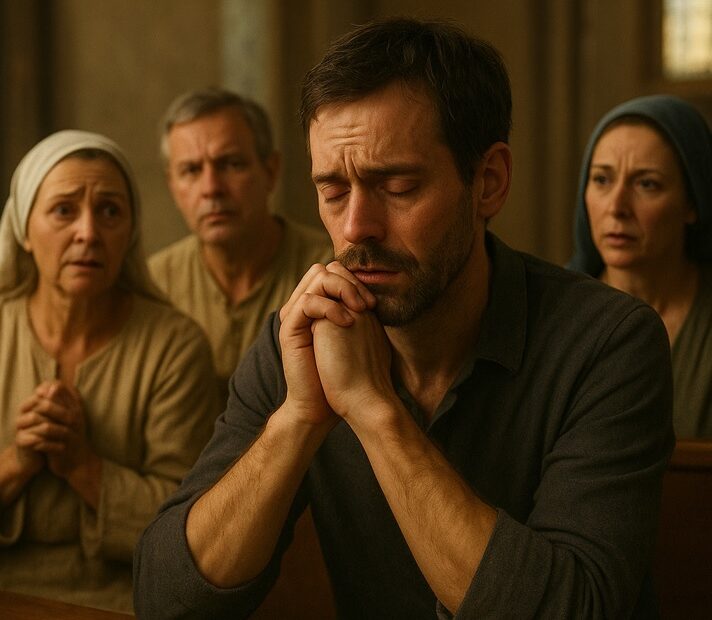
“… qualquer que a si mesmo se exalta será humilhado, e qualquer que a si mesmo se humilha será exaltado.”. – Lucas 18:14
O versículo acima narra parte da parábola do fariseu e do publicano. O fariseu tinha orgulho de si mesmo porque jejuava e dava o dízimo, mas o publicano se humilhava porque reconhecia que era pecador e clamava pela misericórdia de Deus. A bíblia diz que apenas o publicano foi justificado.
Lembre-se que Deus resiste aos soberbos, mas dá graça aos humildes. Neste sentido não devemos mostrar que estamos jejuando como vemos orientado em Mateus 6:16-18 “E, quando jejuardes, não vos mostreis contristados como os hipócritas; porque desfiguram os seus rostos, para que aos homens pareça que jejuam. Em verdade vos digo que já receberam o seu galardão. Tu, porém, quando jejuares, unge a tua cabeça, e lava o teu rosto, para não pareceres aos homens que jejuas, mas a teu Pai, que está em secreto; e teu Pai, que vê em secreto, te recompensará publicamente.”.
O jejum é um meio de nos aproximarmos de Deus. Combinado a oração é uma ferramenta poderosa para crescer na vontade do Pai.
Quer saber mais sobre este assunto? Veja em:
- Como Jejuar 1 de 7 Devo fazer Jejum de Alimentos ou de Pecados?
- Como Jejuar 2 de 7 Posso Contar que Estou Jejuando?
- Como Jejuar 3 de 7 Posso Participar de um Jejum Coletivo?
- Como Jejuar 4 de 7 Posso Jejuar para Buscar o Favor de Deus?
- Como Jejuar 5 de 7 O Jejum Serve para dar Poder contra Demônios?
- Como Jejuar 6 de 7 O Jejum é um Mandamento?
- Como Jejuar 7 de 7 Como Não Fazer o Jejum?
 English Translation
How to Fast 7 of 7 – How Not to Fast?
“… for everyone who exalts himself will be humbled, and he who humbles himself will be exalted.” – Luke 18:14
The verse above tells part of the parable of the Pharisee and the tax collector. The Pharisee was proud of himself because he fasted and gave tithes, but the tax collector humbled himself, recognizing that he was a sinner and cried out for God’s mercy. The Bible says that only the tax collector was justified.
Remember that God resists the proud but gives grace to the humble. Therefore, we should not show others that we are fasting, as taught in Matthew 6:16–18:
“When you fast, do not look somber as the hypocrites do, for they disfigure their faces to show others they are fasting. Truly I tell you, they have received their reward in full. But when you fast, put oil on your head and wash your face, so that it will not be obvious to others that you are fasting, but only to your Father, who is unseen; and your Father, who sees what is done in secret, will reward you.”
Fasting is a way to draw closer to God. When combined with prayer, it becomes a powerful tool for growing in the will of the Father.
 中文翻译(简体)
如何禁食 7 之 7 —— 不该怎样禁食?
“因为凡自高的,必降为卑;自卑的,必升为高。” —— 路加福音 18:14
上面的经文讲述了法利赛人和税吏的比喻。法利赛人因自己禁食和奉献而自夸,但税吏谦卑自己,承认自己是罪人,恳求上帝的怜悯。圣经说,唯有税吏被称为义。
要记得,上帝抵挡骄傲的人,却赐恩给谦卑的人。因此,我们不应向他人炫耀自己在禁食,正如《马太福音》6:16–18 所教导的:
“你们禁食的时候,不可像假冒为善的人那样,脸上带着愁容,因为他们故意使脸面难看,好叫人看出他们在禁食。我实在告诉你们,他们已经得了他们的赏赐。你禁食的时候,要梳头洗脸,不叫人看出你在禁食,只叫你在暗中的父看见;你父在暗中察看,必然报答你。”
禁食是我们亲近上帝的方式。若与祷告结合,它便成为帮助我们更明白天父旨意的有力属灵工具。