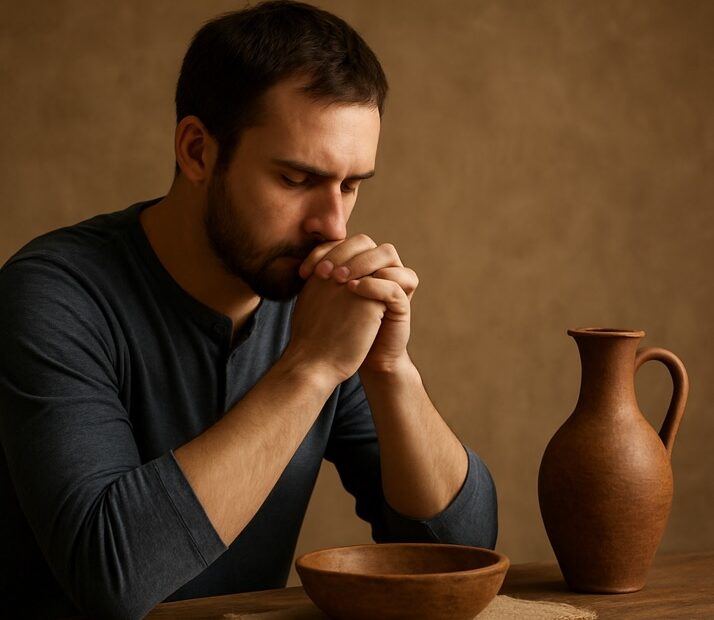
“Os sacrifícios para Deus são o espírito quebrantado; a um coração quebrantado e contrito não desprezarás, ó Deus.” – Salmos 51:17
Não, a Bíblia não apresenta o jejum como um mandamento. Em nenhum momento Deus ordenou que o povo jejuasse. O jejum é uma prática voluntária, uma expressão de humildade e busca por comunhão mais profunda com Deus. Em Mateus 6:16-17, Jesus disse: “Quando jejuardes, não vos mostreis contristados como os hipócritas… Tu, porém, quando jejuares, unge a tua cabeça e lava o teu rosto.” Ele não impõe o jejum, mas ensina como fazê-lo.
No Antigo Testamento, vemos pessoas jejuando em momentos de arrependimento, luto ou busca pela vontade de Deus. Por exemplo, Joel 2:12 diz: “Ainda assim, agora mesmo, diz o Senhor: Convertei-vos a mim de todo o vosso coração; e isso com jejuns, com choro e com pranto.” Ou seja, o jejum aparece como um ato de arrependimento sincero, e não como uma lei imposta.
A igreja primitiva jejuava para buscar direção e fortalecer a fé, como vemos em Atos 13:2-3: “Servindo eles ao Senhor e jejuando, disse o Espírito Santo: Apartai-me a Barnabé e a Saulo para a obra a que os tenho chamado.” Assim, o jejum não é um mandamento, mas uma ferramenta espiritual poderosa para quem deseja se aproximar de Deus com sinceridade. O mais importante não é o ato em si, mas o coração voltado para o Senhor.
Quer saber mais sobre este assunto? Veja em:
 English Translation
How to Fast 6 of 7 – Is Fasting a Commandment?
“The sacrifices of God are a broken spirit; a broken and contrite heart, O God, you will not despise.” – Psalm 51:17
No, the Bible does not present fasting as a commandment. At no time did God order His people to fast. Fasting is a voluntary practice—an expression of humility and a desire for deeper communion with God. In Matthew 6:16–17, Jesus said: “When you fast, do not look somber as the hypocrites do… But when you fast, anoint your head and wash your face.” He does not impose fasting but teaches how it should be done.
In the Old Testament, we see people fasting in moments of repentance, mourning, or seeking God’s will. For example, Joel 2:12 says: “Yet even now, declares the Lord, return to me with all your heart, with fasting, with weeping, and with mourning.” That means fasting appears as an act of sincere repentance, not as a law.
The early church also fasted to seek direction and strengthen their faith, as seen in Acts 13:2–3: “While they were worshiping the Lord and fasting, the Holy Spirit said, ‘Set apart for me Barnabas and Saul for the work to which I have called them.’” Thus, fasting is not a commandment but a powerful spiritual tool for those who sincerely want to draw closer to God. What matters most is not the act itself but the heart turned toward the Lord.
 中文翻译(简体)
如何禁食 6/7 – 禁食是命令吗?
“神所要的祭是忧伤的灵;神啊,忧伤痛悔的心你必不轻看。”——诗篇 51:17
不是的,圣经并没有把禁食当作一条命令。神从未命令祂的子民必须禁食。禁食是一种自愿的行为,是表达谦卑并寻求与神更深交通的方式。耶稣在《马太福音》6:16–17 说:“你们禁食的时候,不可像假冒为善的人那样愁眉苦脸……你禁食的时候,要梳头洗脸。”祂并没有强制禁食,而是教导我们如何正确地去做。
在旧约中,人们常在悔改、哀伤或寻求神旨意的时候禁食。例如《约珥书》2:12 说:“耶和华说:‘现在你们应当禁食、哭泣、悲哀,一心归向我。’”可见,禁食是一种真诚悔改的表现,而不是律法的要求。
初期教会也常禁食以寻求方向并坚固信心,如《使徒行传》13:2–3 所记:“他们事奉主、禁食的时候,圣灵说:‘要为我分派巴拿巴和扫罗,去做我召他们所做的工。’”因此,禁食不是命令,而是帮助信徒真诚亲近神的属灵工具。最重要的不是禁食的行为本身,而是那颗向着主的心。
Pingback: Como Jejuar 7 de 7 Como Não Fazer o Jejum? » Deus te Abençoe
Pingback: Como Fazer Jejum? » Deus te Abençoe
Não é possível comentar.