
“Toda a alma esteja sujeita às autoridades superiores; porque não há autoridade que não venha de Deus; e as autoridades que existem foram por Deus instituídas.” – Romanos 13:1
A Bíblia ensina que toda autoridade vem de Deus, e o cristão deve se submeter a ela, mesmo quando é imperfeita. O próprio Jesus deu esse exemplo ao se submeter ao julgamento de Pilatos, reconhecendo que a autoridade dele existia porque Deus havia permitido. Isso mostra que submissão não significa concordância, mas confiança na soberania de Deus. Veja o que diz em João 19:11 “Respondeu Jesus: Nenhum poder terias contra mim, se de cima não te fosse dado.”.
A única exceção à obediência às autoridades acontece quando elas ordenam algo que vai diretamente contra Deus. Nesses casos, a fidelidade a Deus vem em primeiro lugar. Os servos de Deus não se rebelam por interesse pessoal, mas permanecem firmes quando são pressionados a desobedecer ao Senhor. Veja o que diz em Atos 5:29 “Porém, respondendo Pedro e os apóstolos, disseram: Mais importa obedecer a Deus do que aos homens.”.
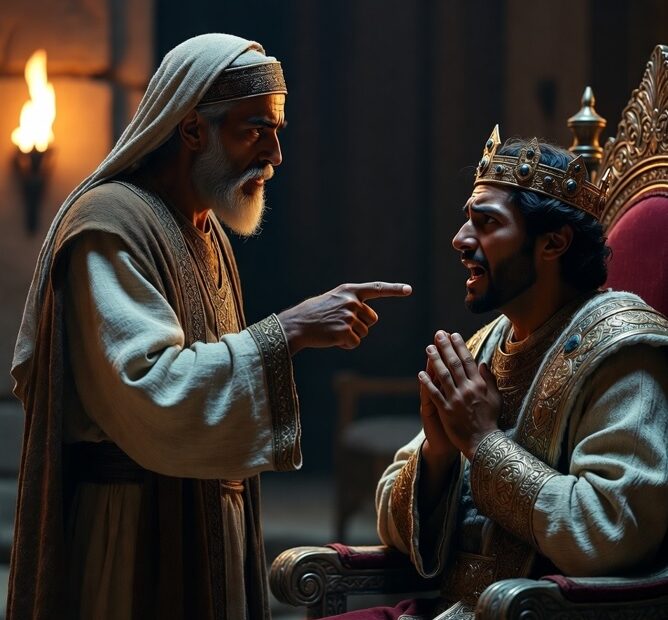
Os profetas do Antigo Testamento confrontavam reis e autoridades porque Israel era uma nação teocrática, um povo terreno governado diretamente por Deus, com uma terra e leis dadas por Ele. Já a Igreja não é um povo político nem territorial, mas um povo celestial, peregrino neste mundo. Por isso, a Igreja não governa a terra, mas se submete às autoridades, confiando que é Deus quem estabelece e remove os reis. Veja o que diz em João 18:36 “Respondeu Jesus: O meu reino não é deste mundo.”.
Quer saber mais sobre este assunto? Veja em:
English Translation
Did the Prophets Confront Authorities?
“Let everyone be subject to the governing authorities, for there is no authority except that which God has established. The authorities that exist have been established by God.” – Romans 13:1
The Bible teaches that all authority comes from God, and a Christian must submit to it, even when it is imperfect. Jesus Himself set this example by submitting to Pilate’s judgment, recognizing that Pilate’s authority existed only because God had permitted it. This shows that submission does not mean agreement, but rather trust in God’s sovereignty. See what it says in John 19:11: “Jesus answered, ‘You would have no power over me if it were not given to you from above.'”
The only exception to obeying authorities occurs when they command something that goes directly against God. In these cases, faithfulness to God comes first. God’s servants do not rebel for personal interest, but they stand firm when pressured to disobey the Lord. See what it says in Acts 5:29: “Peter and the other apostles replied: ‘We must obey God rather than human beings!'”
The prophets of the Old Testament confronted kings and authorities because Israel was a theocracy—an earthly people governed directly by God, with land and laws given by Him. In contrast, the Church is not a political or territorial people, but a heavenly people, pilgrims in this world. Therefore, the Church does not rule the earth but submits to the authorities, trusting that it is God who establishes and removes kings. See what it says in John 18:36: “Jesus said, ‘My kingdom is not of this world.'”
中文翻译(简体)
先知是否对抗过权威?
“在上有权的,人人当顺服他,因为没有权柄不是出于神的。凡掌权的都是神所命的。” —— 罗马书 13:1
圣经教导说,所有的权柄都来自神,基督徒必须顺服权柄,即使它是不完美的。耶稣亲自树立了榜样,祂顺服彼拉多的审判,承认彼拉多的权柄是因为神的允许才存在的。这表明顺服并不意味着赞同,而是对神主权的信任。正如约翰福音 19:11 所说:“耶稣回答说:‘若不是从上头赐给你的,你就毫无权柄办我。’”
服从权威的唯一例外是当他们命令的事情直接违背神时。在这种情况下,对神的忠诚是第一位的。神的仆人不会为了个人利益而反叛,但在被压力逼迫去违背主时,他们会保持坚定。正如使徒行传 5:29 所说:“彼得和众使徒回答说:‘顺从神,不顺从人,是应当的。’”
旧约时代的先知之所以对抗君王和权威,是因为当时的以色列是一个神权政治国家,是直接由神统治的属地子民,拥有神赐予的土地和法律。而教会不是一个政治或领土民族,而是属天的子民,是这个世界的客旅。因此,教会并不统治世界,而是顺服权威,深信是神废王、立王。正如约翰福音 18:36 所说:“耶稣回答说:‘我的国不属这世界。’”
